WAIE (whatamieating.com)
This is the searchable online international food dictionary with 67,413 terms in 307 languages plus 42,027 plurals. Just type in the word that you're looking for and press enter or click on search.
There are other types of search; see search help for more information.
The database behind this site was the loving creation of Suzy Oakes, who has since passed away. She is greatly missed. You can see her obituary in the Guardian
|
| Gloucester cattle
Language: English
Description: A rare breed of cattle with a truly distinctive flavour and the producers of the milk from which Double Gloucester and Stinking Bishop cheeses are made. Cattle are dark lustrous brown to black, with a white line along their backs and down to their rear legs. Their horns are quite sharp and glossy. They are truly beautiful cattle and it was a delight to find a herd at Wimpole. I was brought up in the Berkeley Vale in Gloucestershire and remember the famous herd there and it felt like meeting old friends to find these in Cambridgeshire. Gloucesters are one of Britain's longest-established breeds. Gloucester-type cattle were numerous in the Cotswold Hills and the Severn Valley as early as the 13th century. In the last two centuries however, outbreaks of disease, the introduction of other breeds and the development of intensive farming have led to a dramatic reduction in their numbers. By 1972 only one significant herd remained and the breed was in danger of dying out. Following the dispersal sale of this herd, a small group of purchasers was determined that the breed should survive. As a result, the Gloucester Cattle Society was revived and the breed has moved from near extinction to there being over 650 registered females. More details of their history may be found at their lovely website (see below).
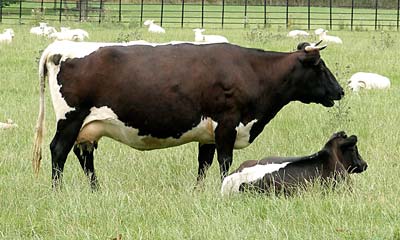
| A Gloucester cow at Wimpole Hall in Cambridgeshire |
|
See foods and dishes: Double Gloucester, Stinking Bishop
|